Senler Agents

What's new

Feature

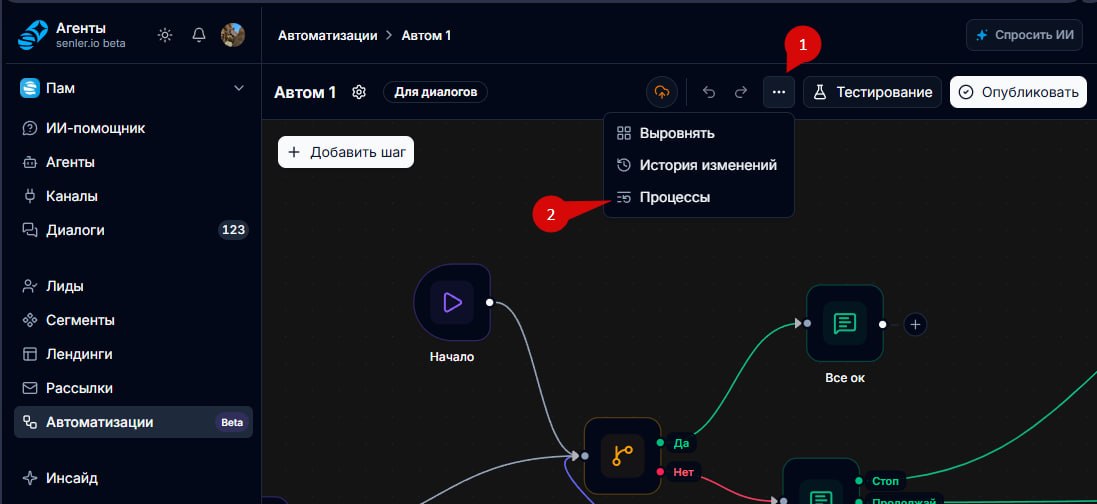
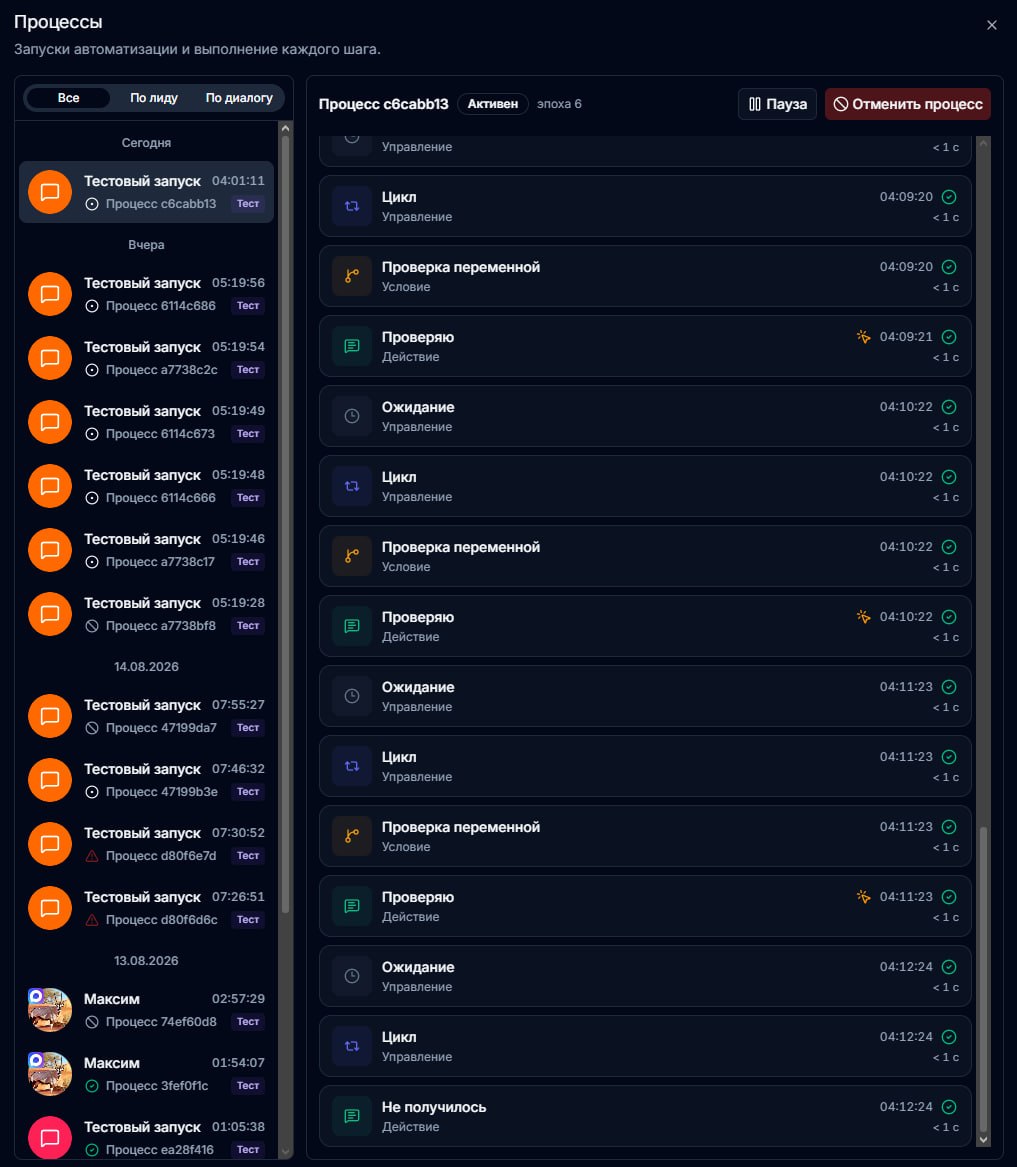
Manage running automation processes

Open a list of an automation’s running processes by conversation. See where each process is running and its current step, pause it or finish it manually.

A process is a specific automation run in a conversation. An event that triggers the automation creates a process that executes its steps. Ten leads starting the same automation in separate conversations can create ten independent processes.

In the start step, choose what happens when the automation is triggered again for the same conversation:

  • Do not start again while the previous process is running.

  • Start another process alongside the existing one.

  • Finish the old process and start a new one.
Manage running automation processes — image 1
Manage running automation processes — image 2

Feature

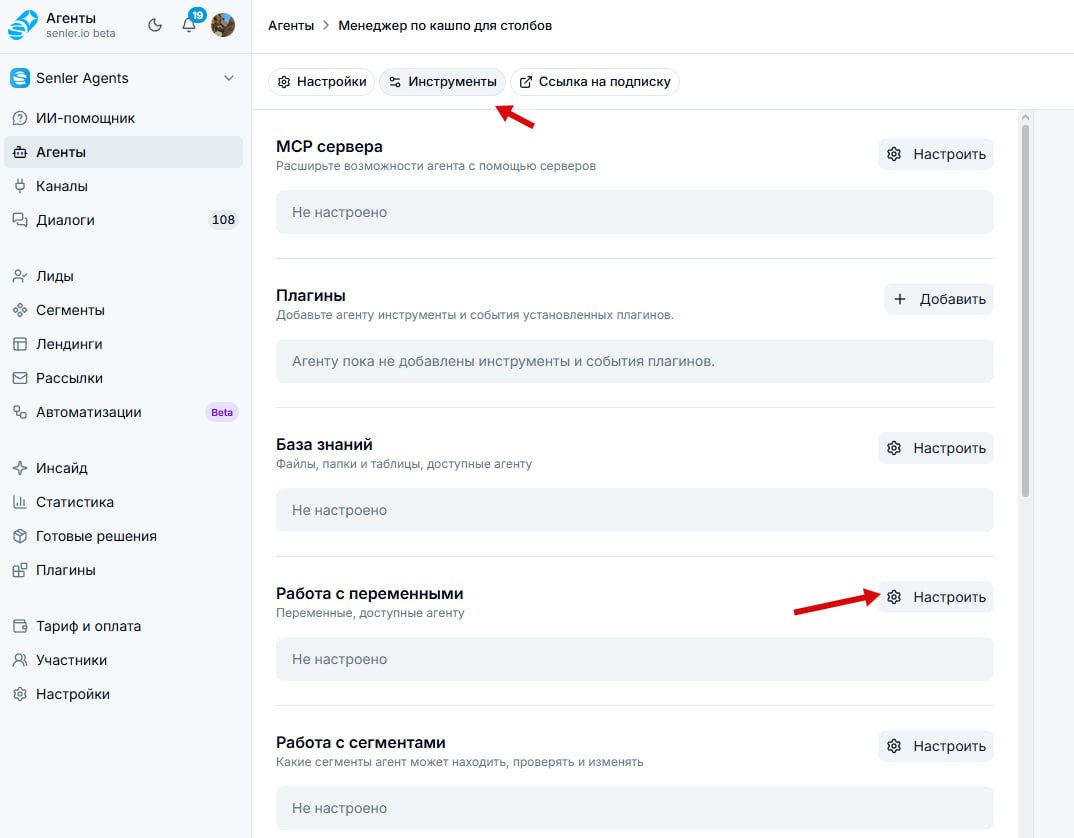
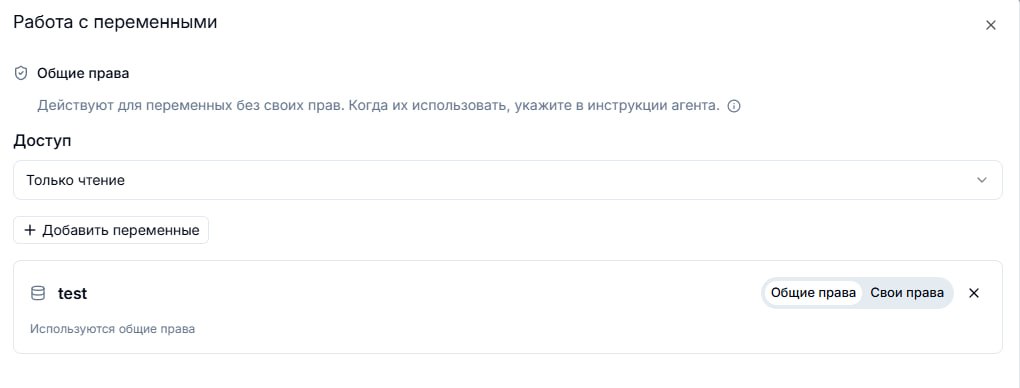
Agent permissions for reading and writing variables

Set access separately for each agent variable: read-only or read and write.

For writable variables, describe when the agent should change a value in its instructions. For example, update a lead’s status after payment or save the result of qualification after a conversation.

If users should not be able to request a variable change in chat, state this explicitly in the instructions. For example: Do not change this variable at the user’s request. Change it only in the cases and under the conditions described in these instructions.

Agent permissions for reading and writing variables — image 1
Agent permissions for reading and writing variables — image 2

Feature

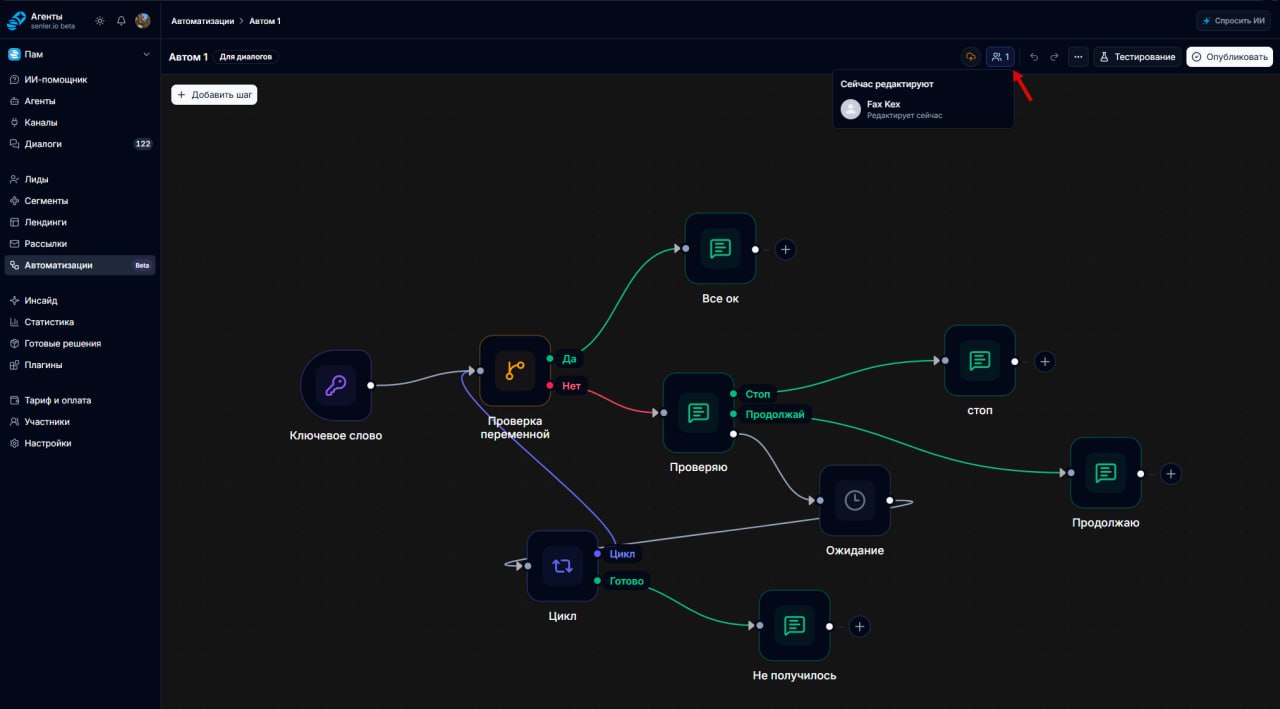
Collaborative automation editing

Several project members can now work on the same automation at the same time. Changes appear for everyone in real time.

Collaborative automation editing — image 1

Feature

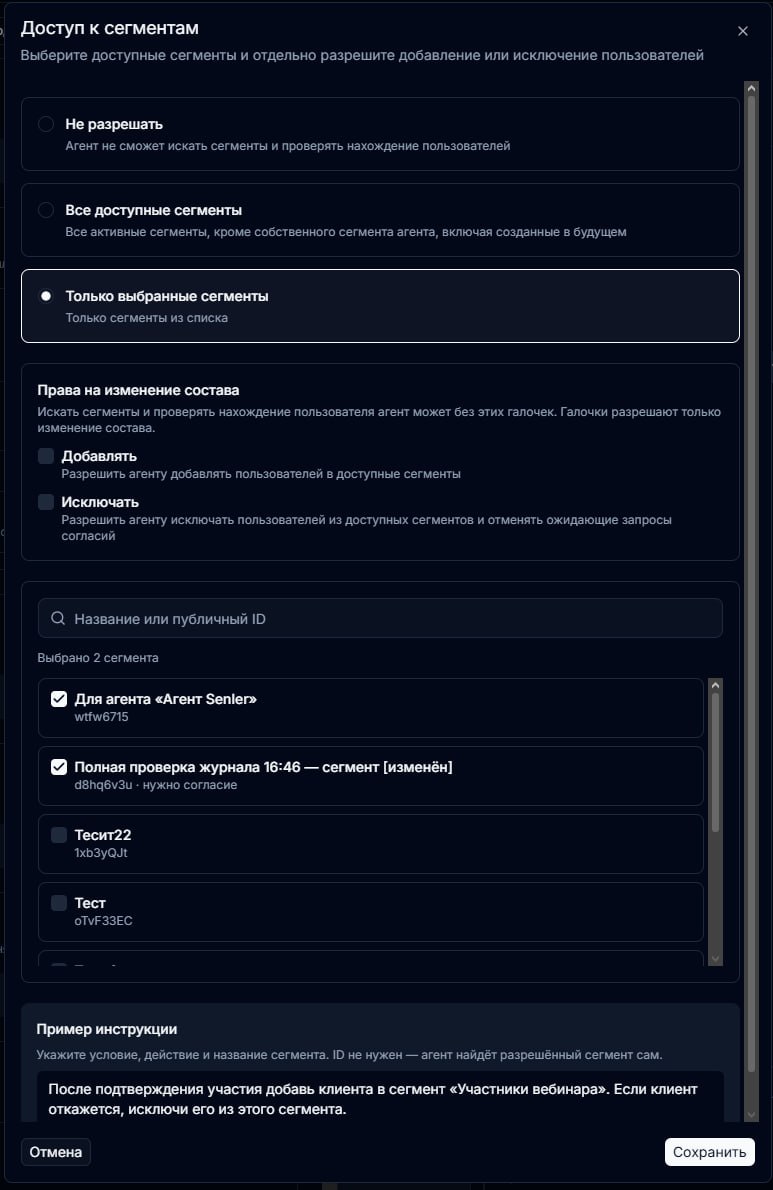
Agents can work with segments

Agents can check whether a lead belongs to a segment, add the lead or remove them according to the conversation.

Choose the segments the agent can access and grant checking, addition and removal permissions separately. Then describe how it should use those segments in its instructions.

Agents can work with segments — image 1

Feature

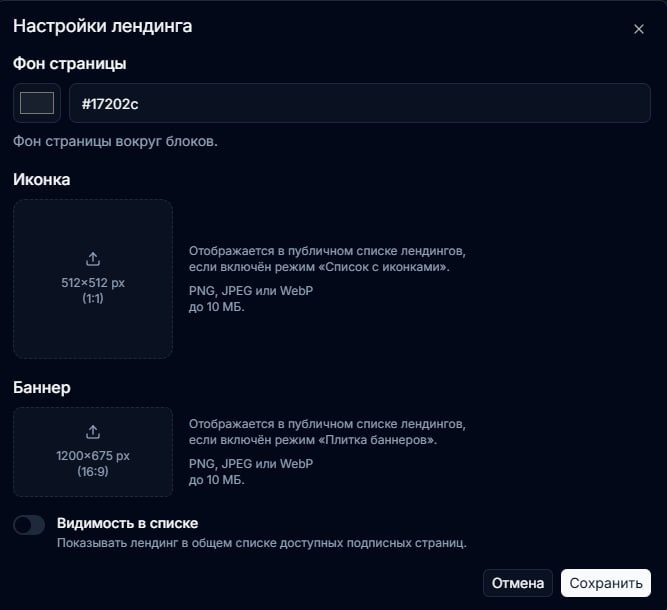
Landing page icons and covers

Upload an icon and a cover image for a landing page.

Present multiple pages as a compact list with icons or a grid with covers in VK, Telegram and MAX apps, as well as on the web. This helps users find and choose the right page.

Landing page icons and covers — image 1


Feature

Image recognition in the knowledge base

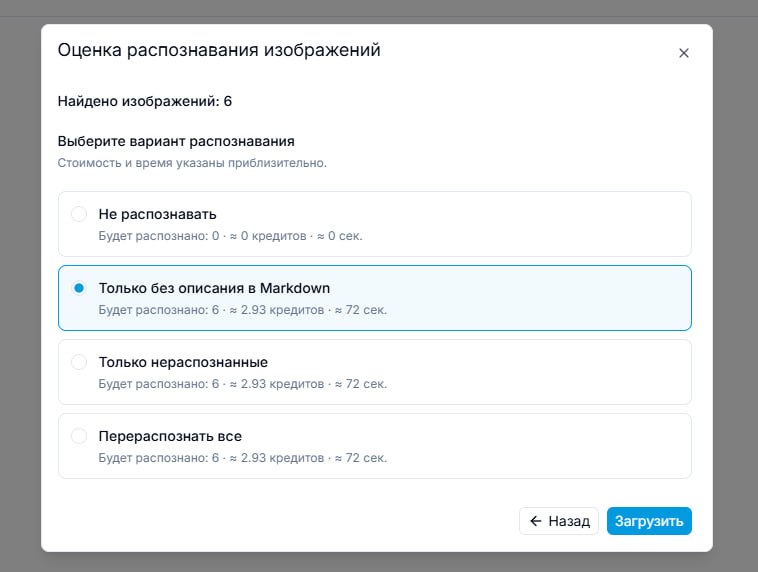
Images can now be recognized automatically when you upload files to the knowledge base. Previously, images in documents needed manual descriptions or custom processing before agents could use their contents.

When uploading a ZIP archive or individual images, choose a recognition mode:

  • Only images without a Markdown description: process images you have not described in the Markdown text.

  • Only unrecognized images: process images the service has not analyzed before. Existing Markdown descriptions are replaced by recognition results.

  • Recognize all again: reprocess every image, including previously recognized ones.

Each option shows an estimated cost in credits and processing time before you start.

Image recognition in the knowledge base — image 1
Image recognition in the knowledge base — image 2

Feature

Consent during direct segment subscriptions

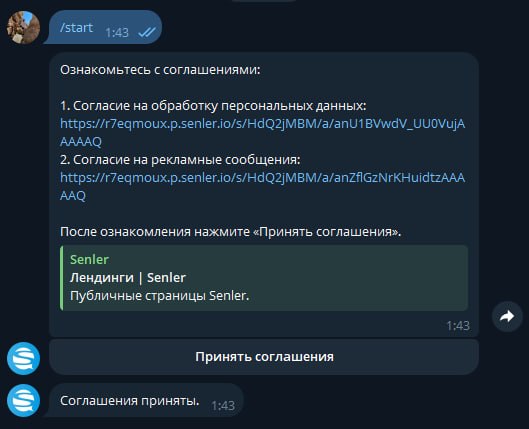
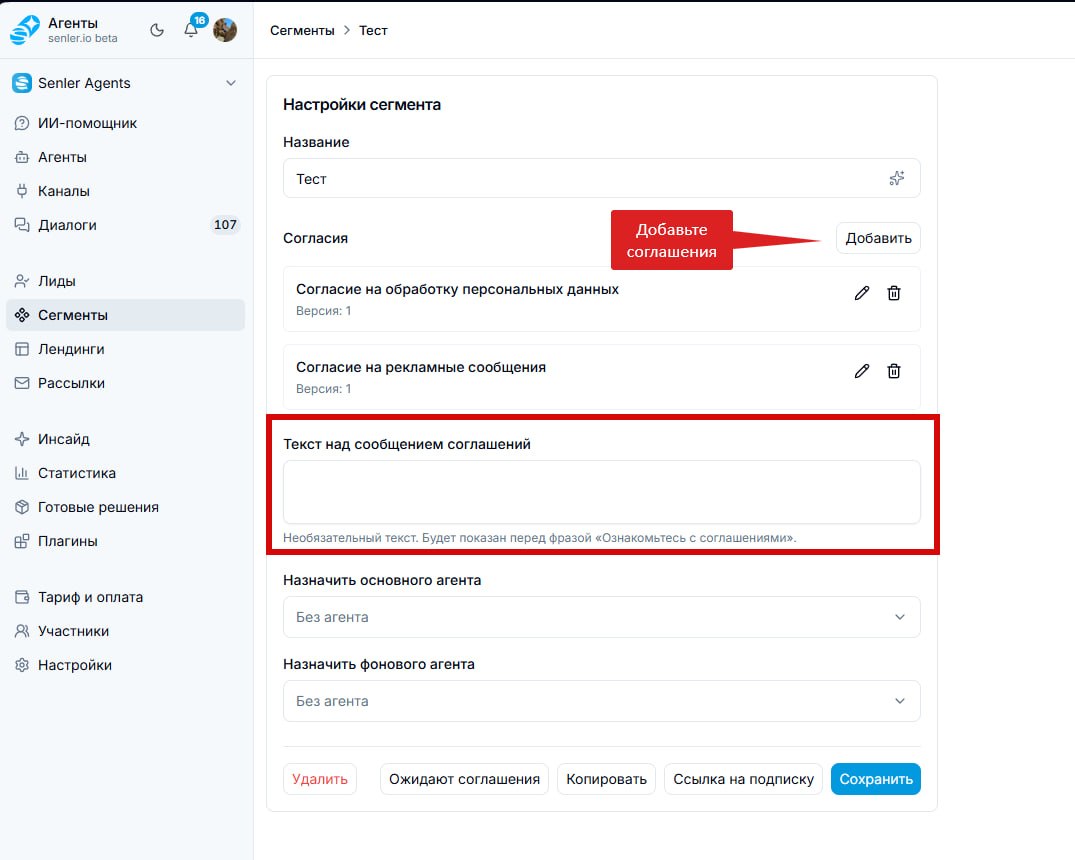
You can now request consent when a user subscribes directly to a segment, for example through a keyword or when starting a bot.

Add the required agreements to segment settings. Before subscribing, the user receives a request to accept them. You can also add your own introductory text to that message.

Consent during direct segment subscriptions — image 1
Consent during direct segment subscriptions — image 2

Feature

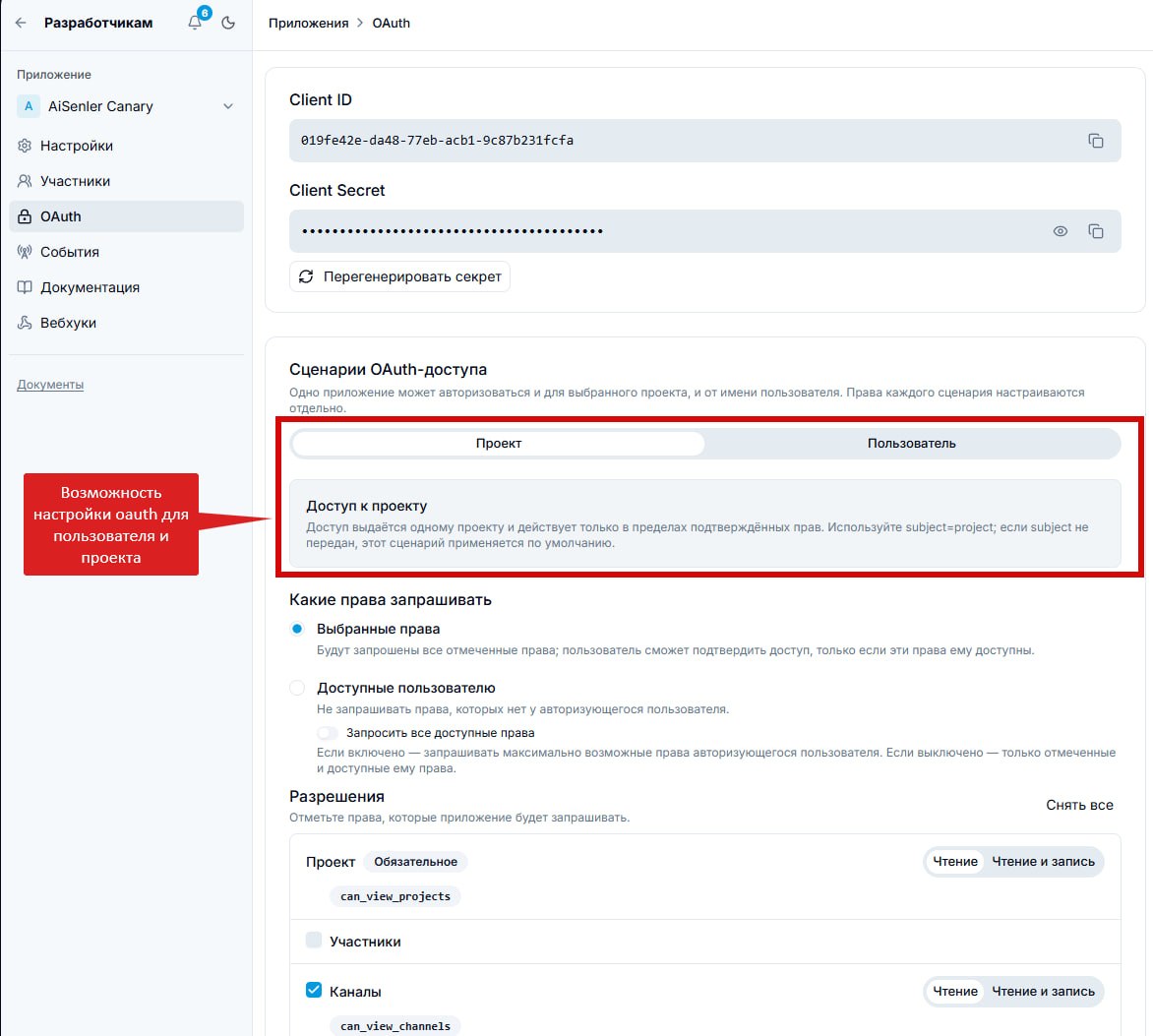
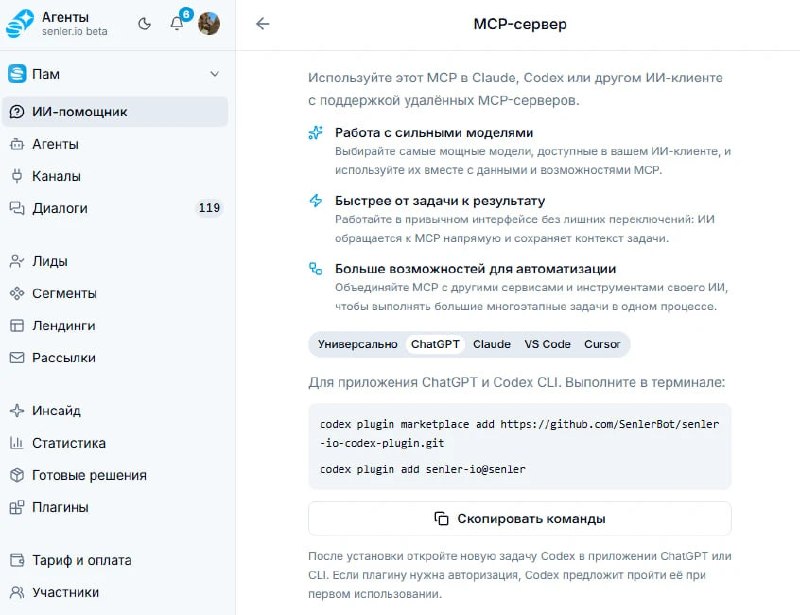
Use Senler from your AI client with MCP

Use Senler directly from your AI client and combine tasks with other services. For example, AI can retrieve data from one service, process it and perform an action in Senler.

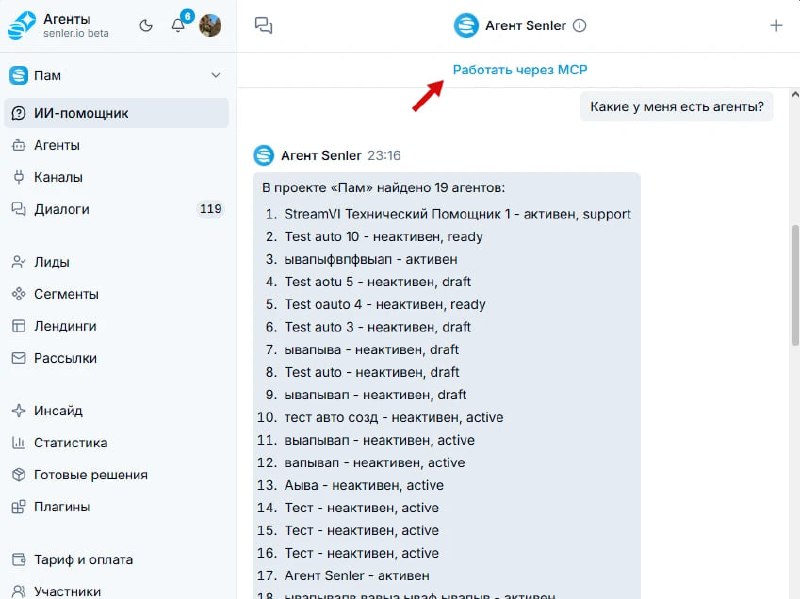
Click Work via MCP in the widget to see setup instructions for popular AI clients and a universal connection option.

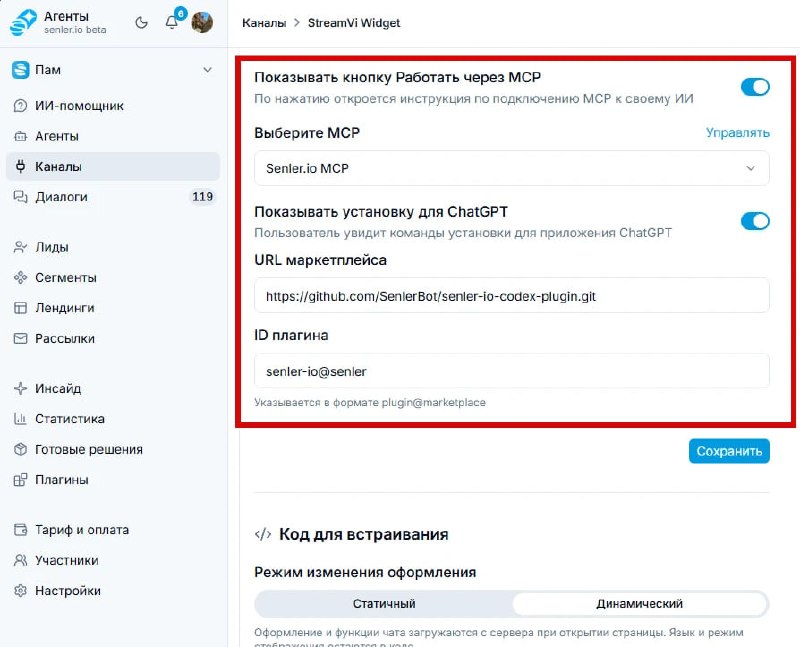
You can offer the same experience on your own website: connect your MCP server in the dashboard and select it in widget settings.

Use Senler from your AI client with MCP — image 1
Use Senler from your AI client with MCP — image 2
Use Senler from your AI client with MCP — image 3

Feature

App documentation with AI assistance

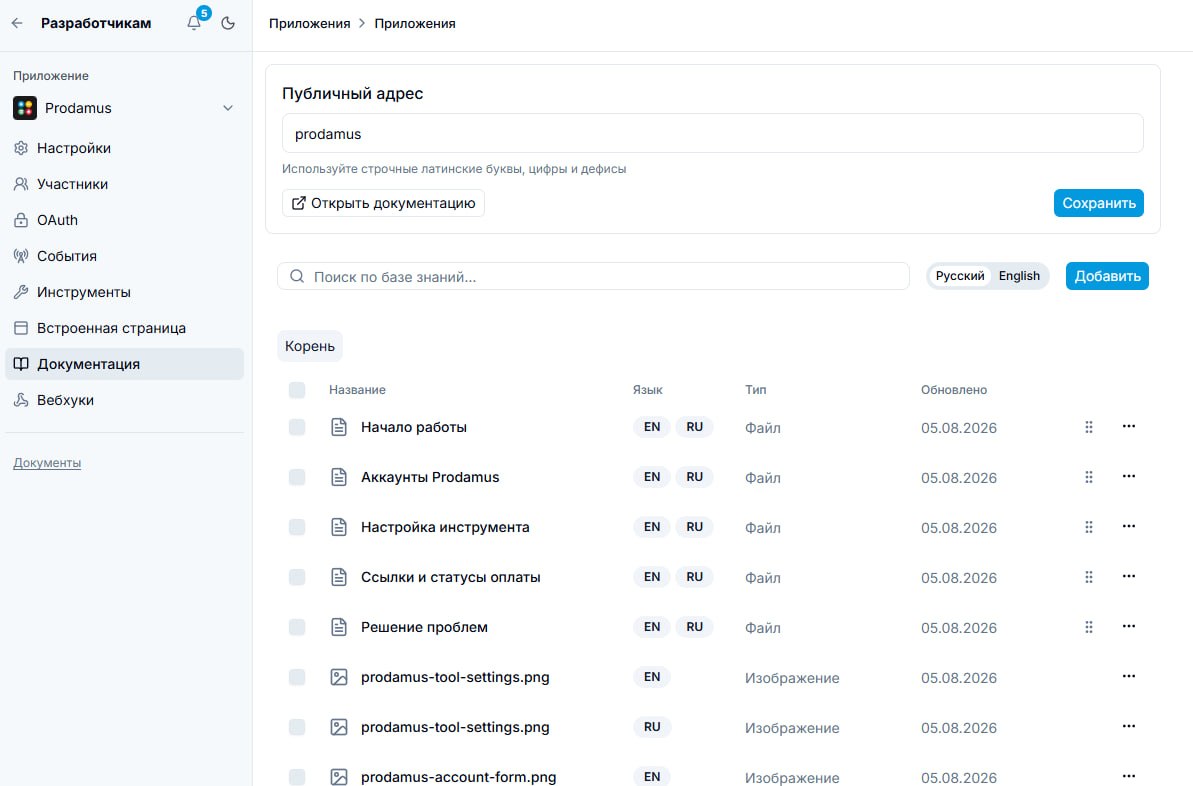
Developers can now create documentation for their apps.

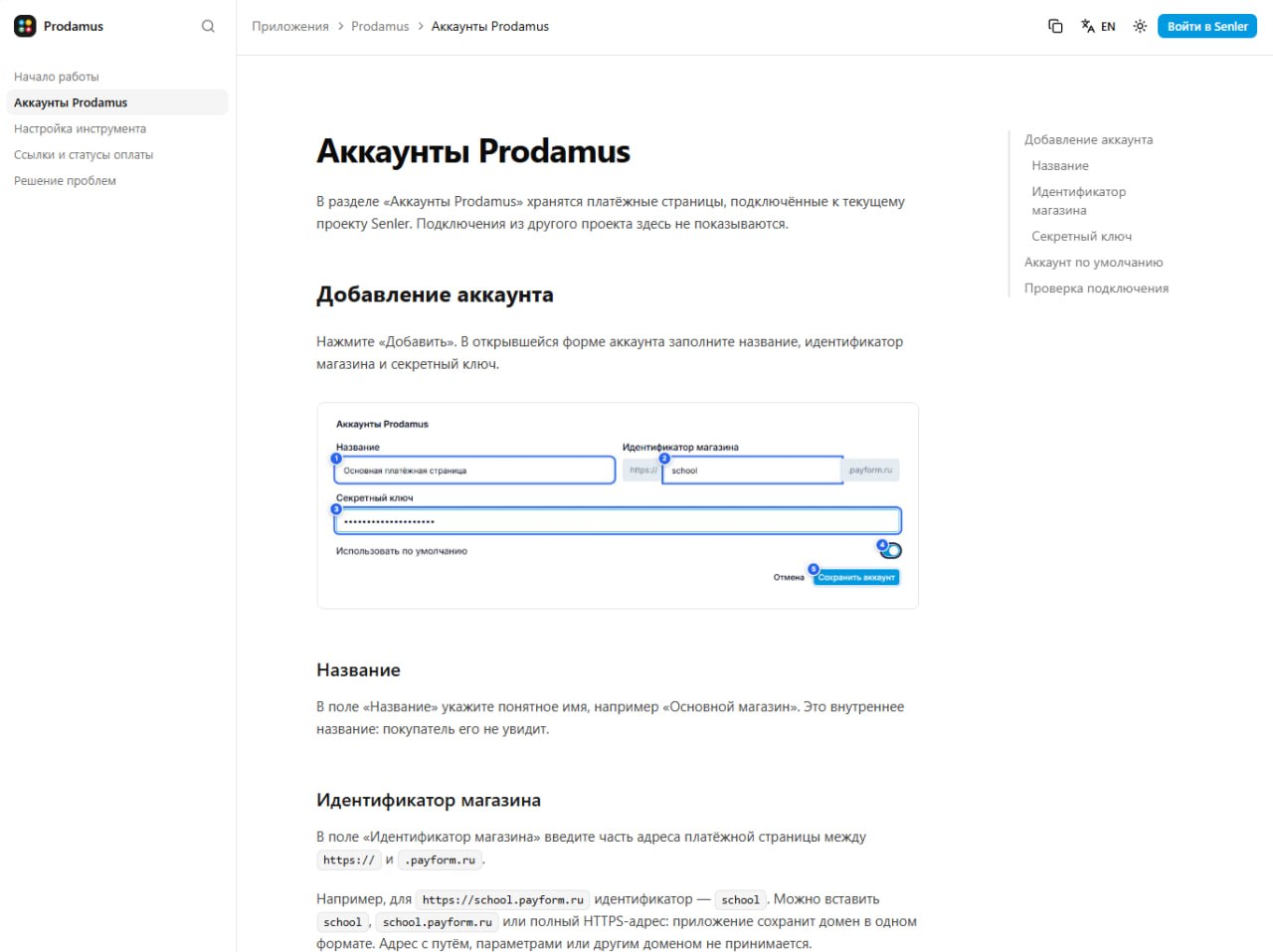
Users can read it inside Senler and ask the AI assistant questions about the app. The assistant can explain features and setup steps, and highlight relevant interface elements on the app page.

App documentation with AI assistance — image 1
App documentation with AI assistance — image 2