
History
How to open History
Select the Settings gear button to the right of the project name, then select History.
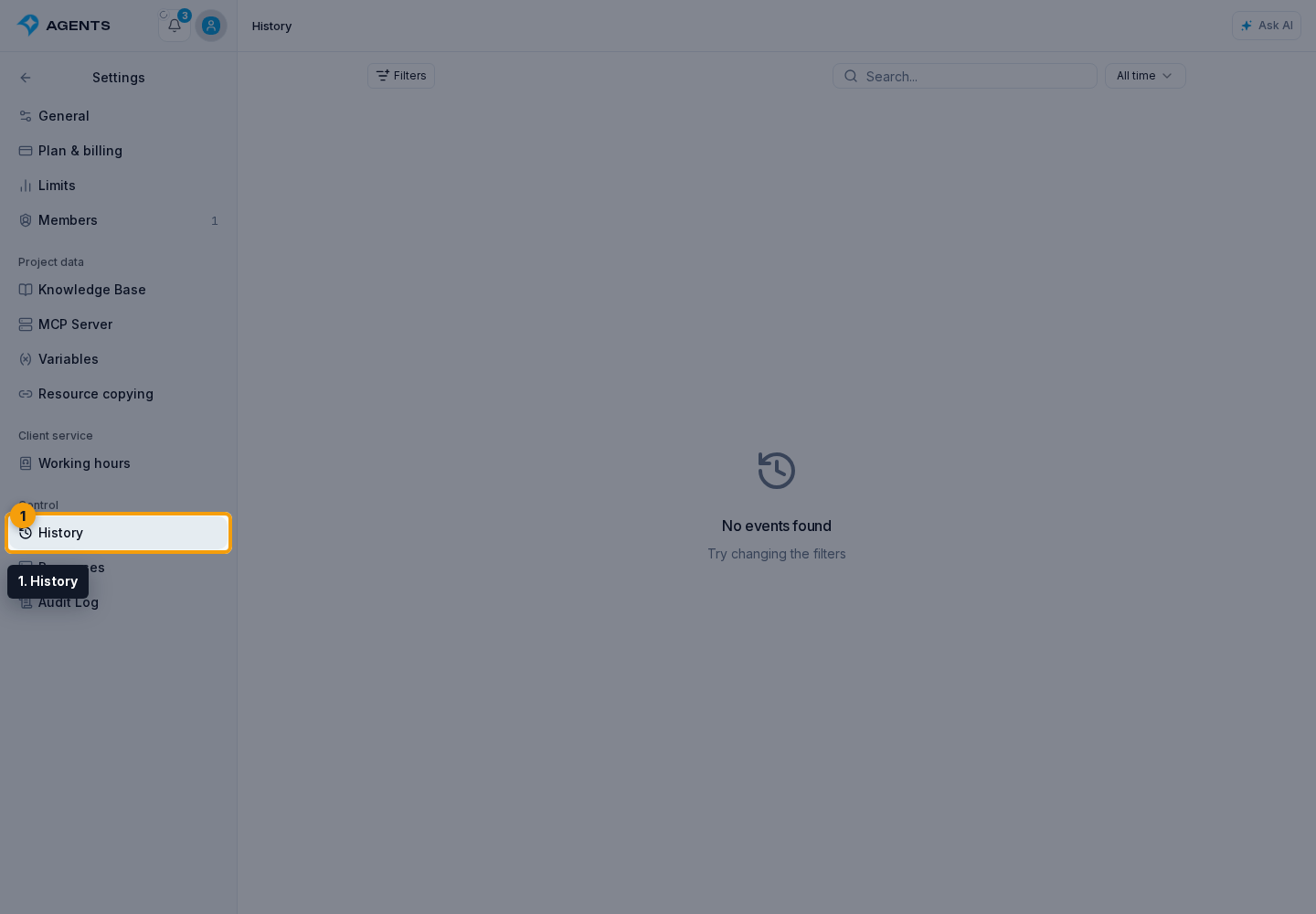
The History page lets you reconstruct what happened in the project: when a message arrived, an agent or tool ran, an error occurred, and whether the reply was delivered. To answer “who changed this setting?”, use the Change log.
An event card contains a title, time, short ID, and the primary data available for that type. Click the card to open a separate event page.
How to find an event
The filter bar always contains search and a period: 24 hours, 7, 30, or 90 days, or all time. In the first screenshot, the bar is number 1 and the period is number 2.
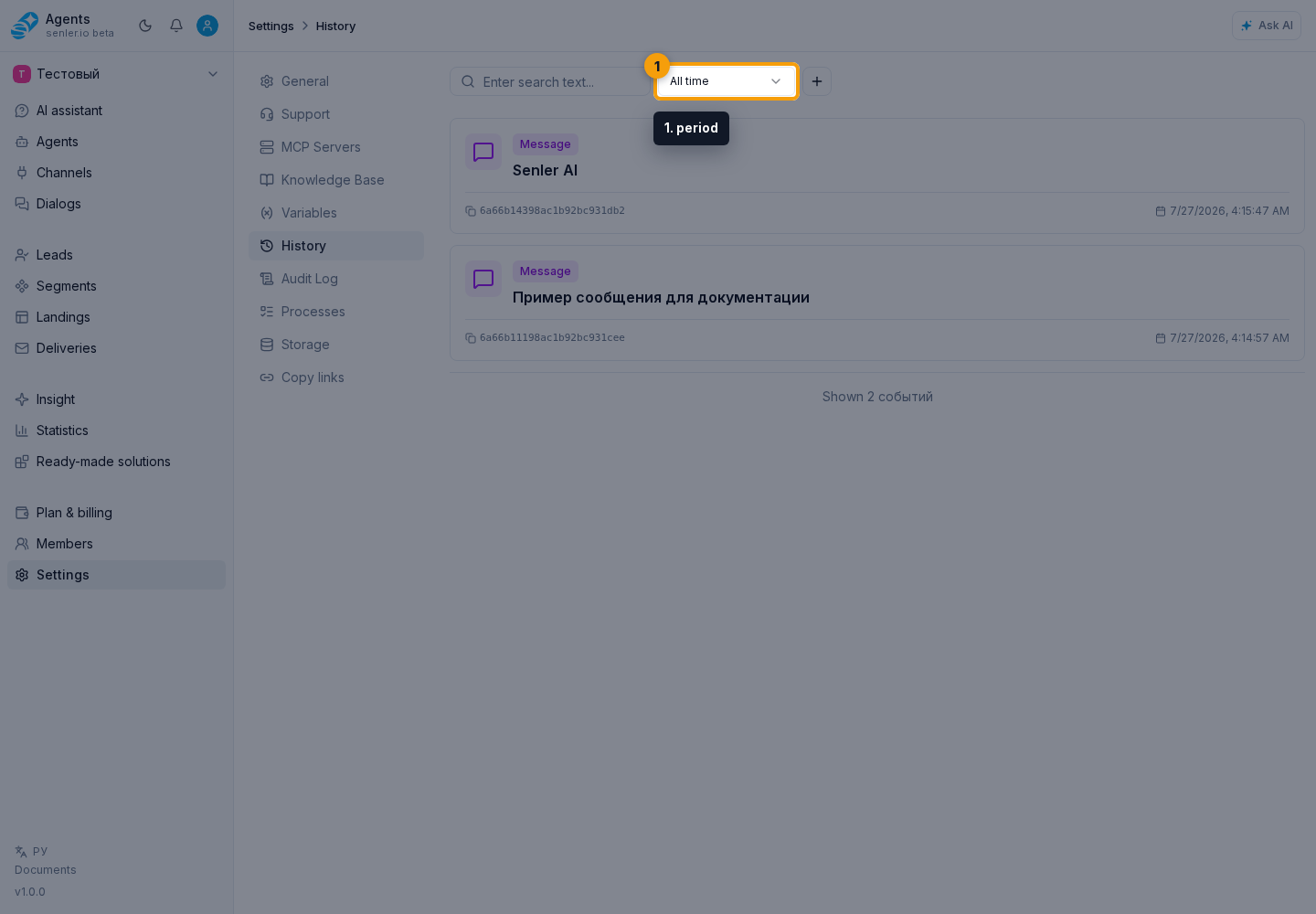
The search field is number 3, and the add filter button is number 4.
Use the add button to display additional fields:
- event type;
- one or more channels;
- dialog ID;
- lead ID;
- agent ID;
- MCP server ID;
- credit transaction ID;
- rolled-back events: all, only rolled back, or exclude rolled back;
- order: newest first or oldest first.
Clear clears values, removes extra filters, and restores All time with newest events first.
Event types in the filter
The interface offers these types:
- message created;
- tool started;
- tool completed;
- state changed;
- error raised;
- rolled back;
- reasoning recorded;
- metrics extracted;
- message delivered;
- message read;
- lead created;
- lead updated;
- dialog started.
Search may match other event data, but the event type filter is limited to this set.
What is on an event page
The event page shows only the data supplied for the selected event. Therefore, a message, tool call, and error have different blocks.
The main area may contain:
- a title and technical ID;
- creation and update times;
- links to related entities such as an agent, channel, dialog, lead, MCP server, or credit transaction;
- rollback information and a link to the rollback event;
- the original structured data for technical diagnostics.
Event data tabs
The tab block displays only non-empty sections. Tabs are implemented for:
- tool input, output, and tool error;
- message buttons and the clicked button;
- attachments, sender, and source context;
- delivery, status, and message interactions;
- typing indicator and timer;
- AI data, costs, and generation parameters;
- event error, related-event hierarchy, and trigger context;
- moderation, broadcast, reaction, and chat changes.
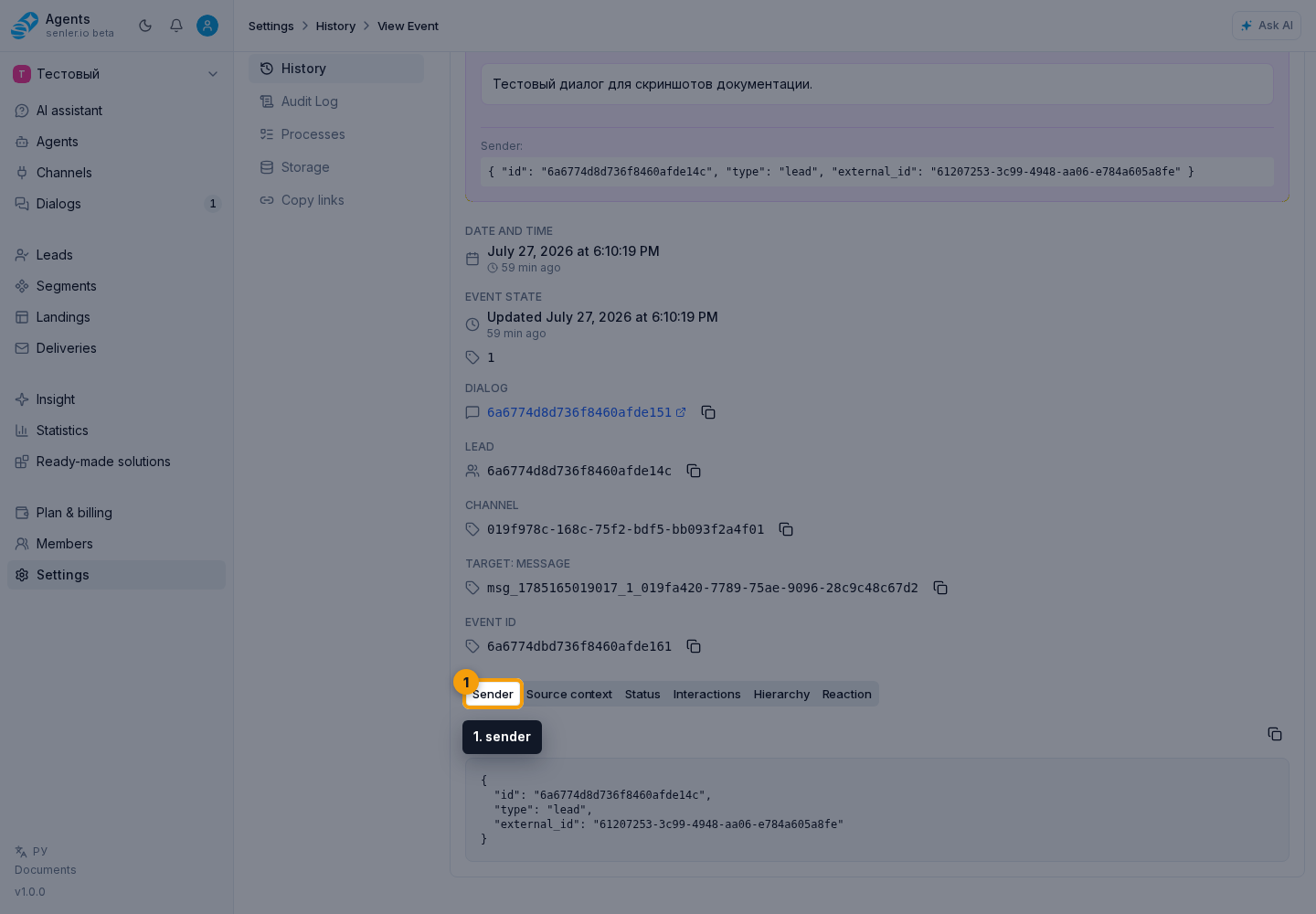
If a tab is absent, that block is not present in this event's data; it is not a separate interface error.
Distinguish A Subscription Event From A VK Check
When importing or synchronizing a VK lead, Senler may verify whether the community can send messages to that person. If the check changes the lead status, History records that message availability was clarified by a platform check. This record does not mean the person subscribed or unsubscribed at that moment.
If the agent did not reply
- Add a filter for the dialog ID, lead ID, or channel.
- Confirm that an incoming-message event exists.
- Check subsequent agent-start, tool, and generation events.
- Open error events and the Tool error or Event error tabs if they appear.
- Check the reply delivery event.
For a support request, copy the relevant event IDs and provide the time of the issue.
If you need to verify a credit charge
Add the credit transaction ID filter or open the linked transaction from the event page. On a generation event, inspect the model, AI data, and costs only when those blocks are present.